Starting life with HIE
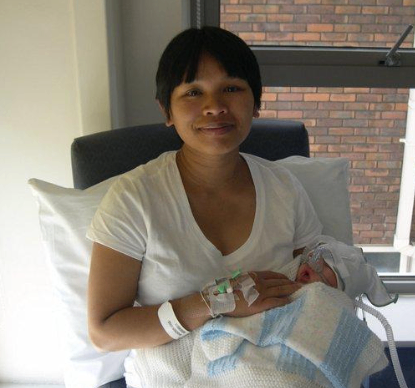
In 2010, Pari (one of our Neonatal Nurses on the Unit) gave birth to Alister who was quickly taken to the William Harvey Hospital and started cooling treatment due to Hypoxic-ischaemic encephalopathy (HIE). Hypoxic = lack of oxygen. Ischaemic = reduced blood flow. Encephalopathy = affecting the brain. We asked Pari to share her family’s story with us:
What would you want another parent or healthcare professional to know about HIE?
I will quote another HIE mum’s words (Rachel’s) here – “I am sorry you are here, but please know that there are supportive community out there to support you”. Please be kind to yourself and don’t ever blame yourselves for any of this. This can happen to any family at any given time.
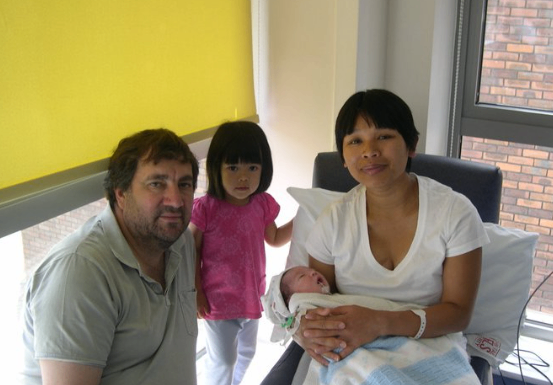
Don’t forget to take lots and lots of photos. That was one thing I’ve regretted. I did not take any photos for the first week of his life. I was too numb and scared. There were only 2 photos of Alister in his first week of his life, taken by the nurses on the neonatal unit. One before he was intubated before the cooling therapy and the other one was when he was intubated. We took our first photos and cuddle at 7 days old.
To the healthcare professionals – thank you for being there for our babies and thank you for contributing to the groundbreaking research on the total body therapeutic hypothermia therapy. Without it, I don’t know where we’ll be today. So, thank you so very much.
I remembered trying to be at every ward round to see if there will be changes. It was only starting to click by week 3 or 4 that the term “wait and see” was going to be a long haul for us. Please be patient with us. Sometimes the only thing that gets us up in the morning is that “hope”. For me, hope means many things: hope that he will get better and also hope that I will come to accept whatever lies ahead of us. That realisation and acceptance will only come with time, and only when we are ready - if at all. We are all individuals, the way we cope will vary and that’s ok. We are only human after all.
For further support, Peeps HIE charity is based in the UK and is a great source of support for families affected by HIE diagnosis. Hope for HIE is another great source of support too and I am sure there are many more.
About HIE (Hypoxic-ischaemic encephalopathy)
HIE is a type of brain injury that occurs when a baby’s brain does not receive enough oxygen and/or blood flow around the time of birth. HIE is sometimes referred to as 'birth asphyxia', 'perinatal asphyxia', or 'neonatal encephalopathy'.
Timing: While it typically occurs just before, during, or shortly after birth, it is usually diagnosed in the first few days of life.
Causes: Common causes include placental abruption (placenta coming away too soon), uterine rupture, umbilical cord issues, shoulder dystocia, placental insufficiency. This list is not exhaustive.
Grading: HIE is graded as mild, moderate, or severe based on the severity of the symptoms, with moderate/severe cases requiring intensive care.
Treatment: Therapeutic hypothermia (also known as cooling treatment) is the standard NHS care for infants 36 weeks gestation with moderate to severe HIE. This involves lowering the baby’s body temperature to 33.5°C for 72 hours to prevent further brain damage. Active cooling should be initiated as soon as possible, generally within 6 hours of birth. The baby must meet strict criteria for the cooling therapy. The medical team will make this assessment.
Signs: Symptoms include low Apgar scores, seizures, breathing difficulties, unusual alertness or excessive sleepiness, and feeding difficulties.
Long-term Effects: Can include cerebral palsy, developmental delays, epilepsy, and learning difficulties.
About Alister’s Story and HIE Journey
Mum, Pari, writes: Please don’t be scared or frightened by my accounts of Alister’s birth. I feel it’s a story of hope and this is the purpose of telling his birth story to raise awareness and highlight the support available for families affected by a HIE diagnosis. So, if you do find yourself in this journey, you are not alone.
This was my 2nd pregnancy. We were expecting a boy and eagerly awaited his arrival. The pregnancy was low risk and we planned for a homebirth. I was idealistic with a birth plan of waterbirth and physiological management of the third stage of labour. To be active and mobile. Everything went well, until it didn’t. You hear that a lot, it echoes in many stories affected by HIE.
I was pushing for 1 hour in the birth pool, head was visible but the progress was slow. In hindsight, we should have considered a transfer to the hospital. But we were nearly there - so very near! The decision was made by my midwife for me to come out of the pool. I was pushing standing upright, but the pressure was too much and I ended up kneeling…leaning against my husband sitting on a birth ball. Head was delivered and attempts were made to deliver with no progress.
My midwife then said “ Pari, you need to turn over onto your back”. At that moment I knew there was a problem. The midwives proceeded to go through the algorithm for shoulder dystocia. I know this being a midwife myself. I was exhausted but I think the adrenaline was kicking in and that gave me the strength to work with the midwives to free his shoulders. It took 7-8 minutes from head to complete delivery of his body. The midwives repeated all manoeuvres 2-3 times and it felt like an eternity. That was the only time I felt that I would lose him. I remembered crying out “my baby!” when he was finally delivered floppy and lifeless and was brought onto my tummy.
The relief on the midwife’s face was short-lived as she whisked him away to start the resuscitation process. I remembered trying to crawl over to help (with placenta still attached). My friend stopped me, she was also a midwife and was there as a birth partner. She put a pillow on the floor and said “Pari lie down and rest”. Feeling exhausted, I did. My midwife threw across a watch and a syntometrine ampoule to my friend, asked her to give the syntometrine in preparation for delivering the placenta, and to keep a note of the resuscitation times. This gave the midwives time to concentrate on the resuscitation. Another community midwife was called to support and deliver the placenta.
While this was going on, my husband was in the corridor calling the ambulance. When asked later how it had affected him, he said “I didn’t see the actual delivery as I was talking to [a] call handler who is asking me all these… questions…when all I wanted was for them to send out the ambulance”.
The midwives commenced CPR for 7 minutes before his heart rate picked up but he was not breathing normally. She continued breathing for him using a bag-valved mask until reaching William Harvey hospital. In summary, Alister was cooled within 3 hours of birth. He was the 3rd baby to receive the cooling therapy at William Harvey hospital. This is because in 2010 the therapeutic hypothermia therapy had just became a standardised NHS treatment for babies admitted with moderate to severe HIE. He was cooled for 72 hours before being rewarmed, and was ventilated for 7 days. We got our first cuddle on day 7 – it was a magical moment. So precious.
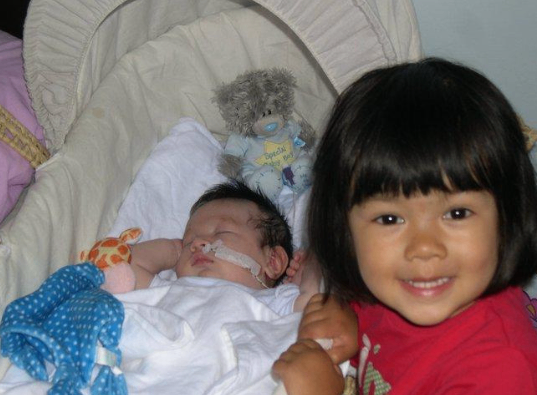
Alister came home at 4 weeks old. We heard his first cry at just over 4 weeks old. He was discharged home fully ng tube fed as he has a poor suck, swallowing and inconsistent gag reflex. In short, it was unsafe for him to start oral feeding. He was followed up by the specialist speech and language therapist to support the transition to oral feeding. This was to be a long process. Despite all efforts he did not breastfeed and did not bottle-feed. We went on to start solids at around 6-7 months. We managed to wean him off the NGT feeding at 11 and half months.
Alister was followed up with physiotherapy from 3 months of age. Fortunately for us Alister did meet his developmental milestones at around 8 months of age onwards. He will be 16 years old in June. He has a diagnosis for ASD at around 10 years old. He is happy, sociable and is very bright (I’m biased of course!) and goes to mainstream school. He is thriving in school and is well liked by his peers and teachers. You can say he is funny, quirky and has this personality that shone wherever he goes. We are so grateful and thankful that we got the opportunity to be his parents. He loves drama and performing on stage. He joined the amateur youth theatre from the age of 10-11 years old and have been in many plays over the years. We are forever grateful and thankful for all the care he has received.
Does caring for babies with HIE feel different after your own journey?
I did not start my HIE journey as a neonatal nurse. At the time of Alister’s birth I was a dual trained (adult) nurse/registered midwife, practising midwifery for 5 years. I did not consider neonatal nursing until I felt mentally and psychologically ready. I felt this need to give back, which may be a common feeling experienced by many parents whose babies were admitted and cared for within a neonatal unit.
Eight years after Alister’s birth I joined the Oliver Fisher Neonatal team. After his birth I didn’t want to come back to midwifery initially. But because it’s what I trained to do and once loved, and let’s face it we all have bills to pay…so I returned. I initially returned to work within the postnatal ward, thanks to a thoughtful and wonderful ward manager that offered me a core team position. This was after she found me broken down and crying during my first newborn basic life support training following Alister’s birth, just before returning back to work. She was present during the training and understood that I needed time away from delivery suite to recover and heal.
I never intended to train as a midwife to just be working on the postnatal ward. My passion was births and I loved supporting mums-to-be and their families in the birthing process. After a few years on the postnatal ward I was able to return back to all areas of hospital midwifery, supporting families again in the birth itself. The experience did change me as a person and as a midwife I became more cautious. I’m not sure if this is a good or bad thing. But it is part of who I am now and I’ve learned to cope with this.
My stance when first joining the neonatal unit was to see how it goes. My goal was to give back the care that was given to Alister. If it didn’t work out I’ll probably have gone back to midwifery. I was surprised at how well I coped with the transition to neonatal nursing. I was surprised at how much I loved supporting babies and their families. Yes, its daunting and challenging at times. But it is so rewarding to be able to help in some small ways and help ease the burden. Having been there as a parent, it helps me a little to build connections and rapport with families and to provide care and support to the best of my ability. I am grateful to be part of a supportive and caring team at the Oliver Fisher Neonatal Unit.
What has this journey taught you that you wish more people understood?
I remembered feeling that if I didn’t love him so much…I will care for him better. But I was so wrong. Love was the thing that helped us get through this difficult journey. And our little girl at the time (She’s 18 now!) also kept the routine going once at home too. She was the light during some dark moments.
Plasticity of the brain - I don’t know how it works and whether Alister’s brain was rewired. This was not where we thought he will be. For me, it was a miracle. I am still pinching myself every day. It was something I daren’t dream of.
Please say hi to families affected (unless they don’t want to). Don’t be scared by the diagnosis. Sometimes, all we need is a listening ear to help us during the days that we find difficult. Just by being there helps. Help with little things like cooked meals, transport, housework, childcare. Taking the pressure off during that difficult early days and months really goes a long way.
Thank you for taking the time to read Alister’s story. If you have been affected by HIE, please visit Peeps HIE charity and Hope for HIE for more resources and support.